


With the development of FFU, as an independent fan filtration unit, its application scope has become increasingly widespread. It is used in various places such as large LCD panel factories, wafer factories, packaging plants, pharmaceutical workshops, livestock farms, biological laboratories, and sterile workshops, etc. Different users have different requirements for the use and control of FFU. To meet the control requirements of different customers, A-Plus has developed a control system that can simultaneously be compatible with different drive forms of FFU - elisaPlus AC/DC compatible FFU control system.
In this system, the DC (EC) part of the FFU maintains the original architecture. Based on the DC FFU architecture, a new AC controller is developed. And the same network communication architecture as the DC FFU is adopted. The purpose of achieving a monitoring system that is compatible with both AC and DC FFU is realized.
In the past FFU projects, AC FFU had good cost-performance advantages. However, the relatively backward control system and the very large current harmonic problem limited the application of AC-FFU. The new controller addresses these weaknesses and makes targeted improvements. This enables AC-FFU to achieve large-scale control like EC-FFU in the future.
With the upgraded AC FFU, the following advantages are achieved:
1. The voltage regulation has been changed from the original thyristor transistor regulation to coil transformer regulation. The advantage of thyristor regulation is its low cost. It can significantly reduce the overall cost of the product. However, its drawback is that during operation, the power factor is very low and a large amount of current harmonics are generated. This causes the current harmonic distortion of the entire power grid to reach over 50%. If there are a large number of FFUs, it will inevitably pollute the entire power system of the factory area. This may lead to dangerous situations such as excessive zero-line current and overheating of the busbar. Therefore, for this reason, the voltage regulation method of the new controller has been changed to the form of coil transformer. Although the cost has increased, it has eliminated the problem of current harmonics. After testing, under the working condition of 1500 air volume and 200pa total pressure, the current harmonic of FFUs has decreased from the original 51.2% to 9%.
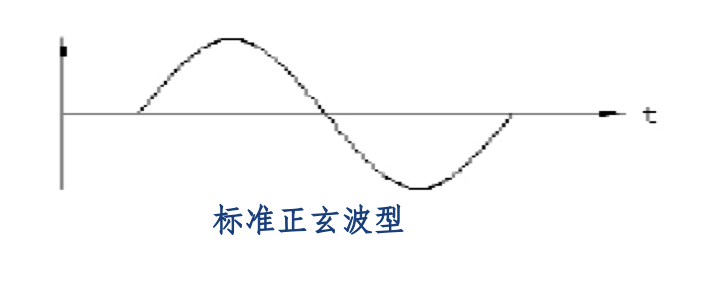
2. Optimize power factor to achieve a 15% energy-saving effect.
The speed control module of the new controller incorporates a new power factor correction feature, combined with the coil transformer, enabling a power factor of over 97%. This results in higher electrical efficiency and achieves a 15% energy-saving advantage over the original AC controller.
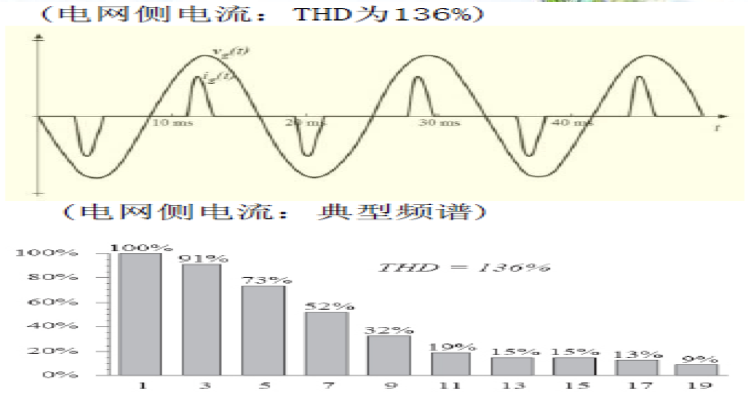
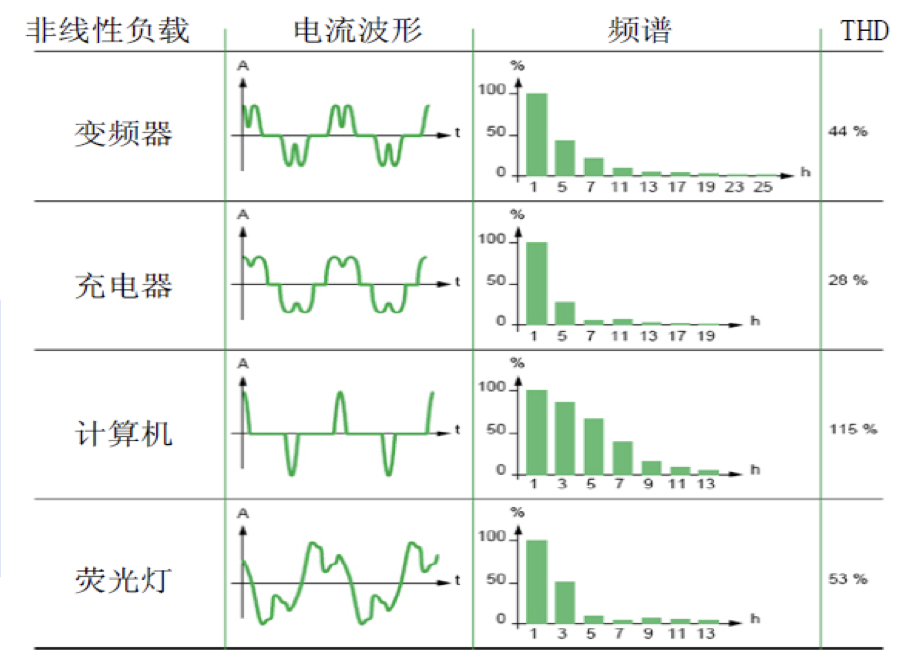
3. Noise reduction.
Due to the decrease in current and voltage harmonic distortion rates, the current waveform has become closer to the standard sine wave, resulting in a change in the noise generated by the fan during operation. Under the distorted waveform, the noise of the fan is manifested as regular and noisy current sounds. Under the standard sine wave, the noise of the fan decreases, mainly reflected in the wind noise. According to the test, the noise is reduced by 2 to 3 decibels under the same operating conditions.
4. Compatibility with DC control system.
The new controller adopts the same communication format as the DC FFU. It is achieved in software compatibility. After the FFU is installed, it can be used to mix AC and DC FFUs. This is very convenient for customers to add, modify, move, etc., of the FFU. The communication transmission distance of the controller reaches 1000 meters. It can cover the entire factory area. Moreover, it has the same scalability as the DC system, such as regional management, energy consumption management, time-based speed reduction, fire linkage, and other user-friendly functions.